
What kind of life can we create with digital technology?
Hitoshi Ochi, President & CEO of Mitsubishi Chemical Holdings
With digital technology constantly evolving, how can you incorporate it into business management? It's a tremendous challenge, and crucial to prosper in these times.
Here at Mitsubishi Chemical Holdings, we launched our Emerging Technology & Business Development Office in April 2017 and invited the head of an IBM Japan research center to be its Chief Digital Officer (CDO). This is an indication of our determination to change our research and development, production, sales processes, personnel, and accounting systems by applying completely new ideas and adopting outside perspectives on digital technology.
We will fundamentally alter the way we work by introducing new technologies -- a major change made possible by the digital transformation. Many people worry that jobs now performed by humans will disappear with the arrival of artificial intelligence (AI), but in fact the opposite is true. Workers, freed from simple, routine work, will be able to apply their time and talents to tasks that require creative thinking.
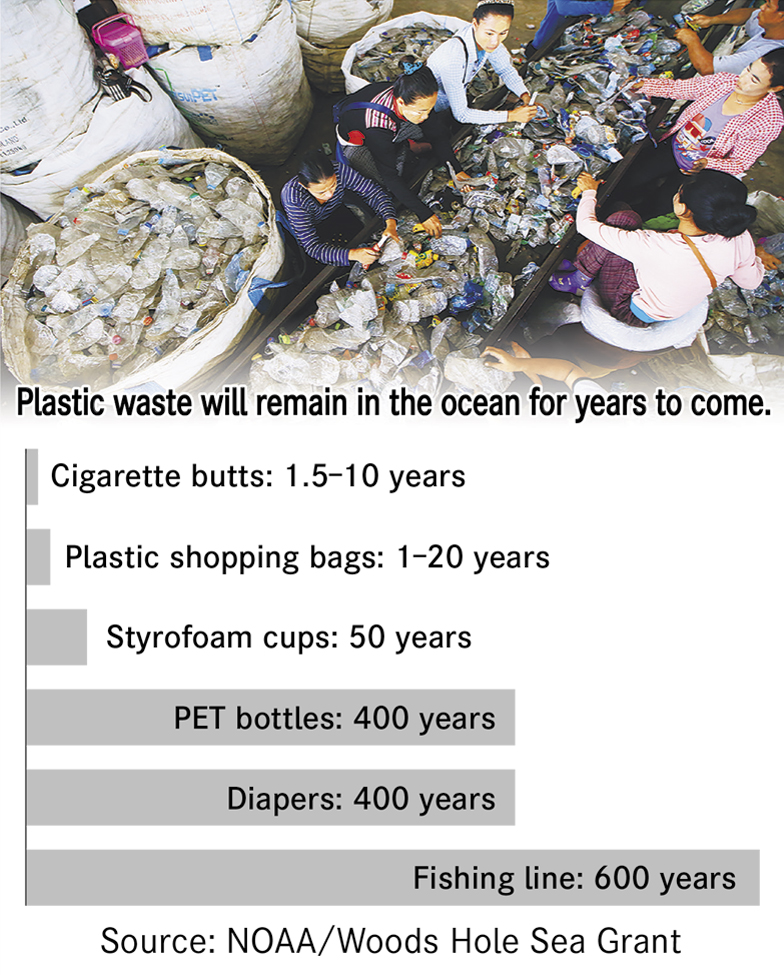
This is true with both products and services. The proliferation of plastic waste, for example, is a global problem, but by utilizing digital technology, it should be possible to develop plastics that are easy to recycle and recover. In addition, AI and information and communications technology (ICT) will make telemedicine a reality, allowing patients to receive care in their home or in a familiar place, without the need to travel to a distant hospital.
The business environment surrounding the automotive industry — a core industry for Japan — has also changed. Digitization is intensifying, meaning companies until now unrelated to the industry are becoming involved in research on self-driving cars and other technologies. It seems that, just as serious discussions on flying cars began, they became a reality. The speed of transformation is beyond imagination.
Our living spaces will extend beyond the surface of the Earth to the air, underground and underwater. To experience and adopt cutting-edge changes, I have also recently met with young executives from start-up companies in the U.S. For projects we can work together on, we make decisions and act quickly. Employees are driven by the motivation that, thanks to the digital transformation, a single day's delay can result in a company missing the boat and being left years behind.
The digital transformation will also lead to more comfortable working environments for employees. If workers are freed from desk work, there is no need to gather at a central office at regular times. The ability to work at home or in rural areas will ease crowding on commuter trains and lead to greater energy efficiency.
With digital technology, ideas that had been impossible, or were abandoned, or seemed the mere stuff of dreams, will become reality. The possibilities are endless.
So I have a question for the readers: What new things do you think will be possible if people and digital technology are successfully combined and coexist? How will our lives change? Imagine a new era using your own unique ideas.
【From the Editorial Committee】
Digital transformation began in the world of goods and spread to the world of information. As indicated by President Ochi in the interview, digital transformation now extends to the life sciences. The evolution of the use of iPS cells and other regenerative treatments is striking. This evolution is being accelerated by digital technology. According to President Ochi, 40-year-olds today have a 50% chance of living to 100. The average life expectancy of Japanese people is likely to increase.
Of course, if living healthy lives to the age of 100 becomes commonplace, the current retirement age of 60 and the payment of pensions beginning at 65 will have to be reviewed. We find ourselves in an age where technological innovation leads to work-style reforms and a review of the pension system. The digital revolution will boost productivity and improvements in quality. This will extend beyond the manufacturing and service industries to include the production of fruits and vegetables and other agricultural products, the raising of pigs and poultry and so on in the livestock industry, and fish farming and so on in the fishery industry. The changes brought by digital technology will rapidly improve our daily lives.
(Ryo Suzuki, Nikkei staff writer)
“Vision of the Future” is a section that Nikkei Inc. creates through close consultations with our readers on various challenges. The latest issue focuses on ideas that can change the world. We invite everyone to offer suggestions.
Top executives of Japan's leading companies will select some of the most promising submissions.