

What will be expected of convenience stores in the Reiwa era?
Sadanobu Takemasu, President of Lawson
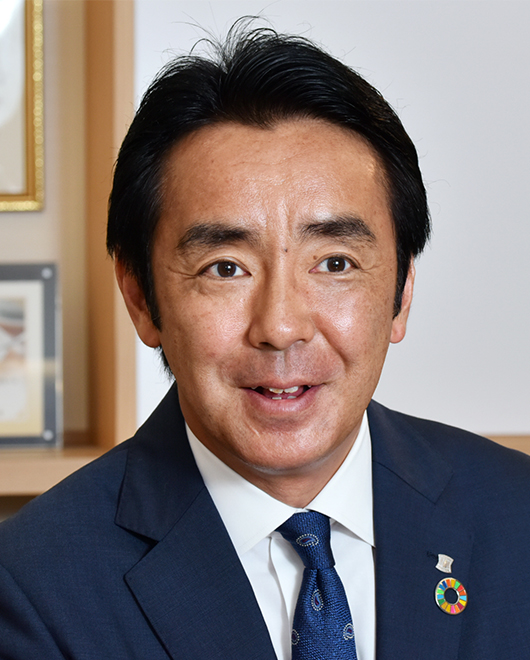
We are now into the third month of the Reiwa era. If you superimpose the history of imperial eras and that of convenience stores in Japan, you may say the following. Convenience stores in Japan were born in the Showa era and, by providing for the diverse lifestyle needs of consumers 24 hours a day, cultivated their foundation as a retail business and became part of society. In the Heisei era, they provided lifestyle services beyond the functions of retailers while incorporating innovations such as IT. By using nationwide store networks and a flexible logistics system, they built the functions of a living infrastructure not only for daily life but also support for disaster victims, and through that it become possible for them to take root regionally.
Lawson's operations in Japan began with the opening of the first Lawson store in Toyonaka City, Osaka Prefecture, in 1975 (Showa year 50). Since then, under the corporate spirit of "let's be the first," there are a number of initiatives that bear the epithet "Lead the convenience store industry." For example, in-store cooking fried chicken "Kara-age Kun" started in 1986 (Showa year 61). The advance into mainland China began in 1996 (Heisei year 8). In 1997, we opened a store in Okinawa Prefecture, quickly achieving a nationwide chain of 47 prefectures. In 1998, we completed the installation of our multimedia terminal "Loppi" at all shops, and product lineups in the service field increased dramatically. We are proud of having been able to accumulate actualizations of customer expectations quickly.
It may be said that expectations are now rising more than in Showa and Heisei. Rising employment rates for women put pressure on the time spent on housework. In particular, customers would surely like to make the time it takes to cook dinner more efficient. How convenient would it be if all the ready-prepared food people need were at Lawson? For convenience stores to remain close to customers they will be increasingly watched as important bases in this aging society, and new products, services, and functions will be required.
Although the convenience stores of Showa and Heisei leveled out and grew, I think that in the Reiwa era we will realize diverse value in our shops and unite those diverse values to innovate. Lawson has a strong partnership with Mitsubishi Corporation. Along with global procurement in search of delicious ingredients, Lawson will create new value combining the functions of trading companies, such as IT and finance.
We also must empathize with our customers. From June, Ehime and Okinawa prefectures began working to simultaneously solve the two issues of reducing food waste and donating to support children. Buying a boxed lunch or rice ball that is close to expiry returns 5 points per 100 yen and 5% of sales will go to childcare support. We are convinced that society will move in a better direction as the number of customers who agree with this objective increases.
There is something I would like readers to think about. That is, “What will be expected of convenience stores in the Reiwa era?” I look forward to great ideas.
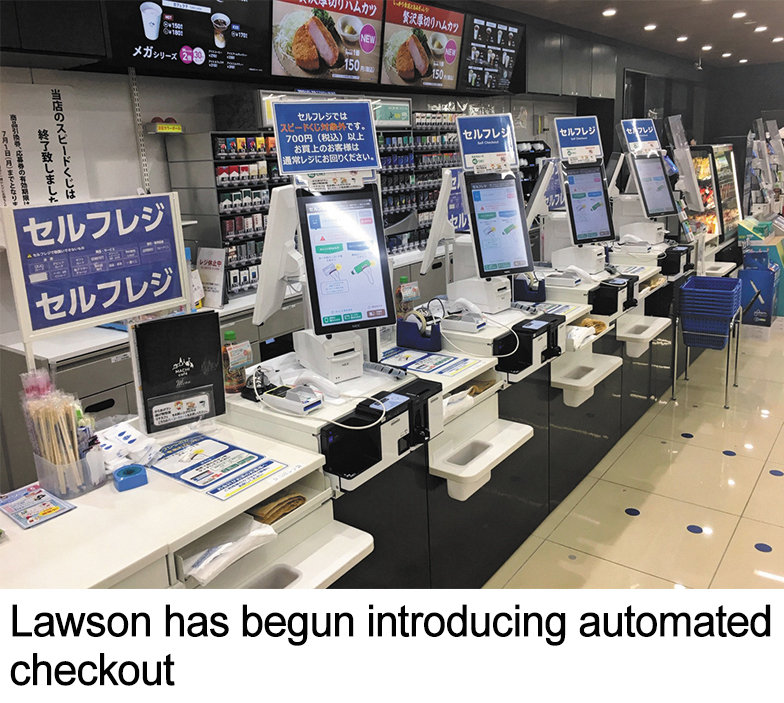
【From the Editorial Committee】
Lawson changed its corporate slogan from "Town Health Station" to "Town Relief Station" this spring. Even when eras change, it goes without saying that "health" is something we always pursue. We already have many pioneering initiatives in the industry such as development of low-sugar bread and collaboration with pharmacies and nursing care providers.
It seems that there are three promises put into "relief." Overwhelming great taste, kindness towards people, and kindness towards the planet (town). We cannot survive as a company without facing each of these things sincerely. Each and every shop must be aware of this and connect to customers.
The convenience store industry is currently at a crossroads in terms of long business hours, labor shortages, food waste issues, and so on. However, although there have been difficulties in the past, history shows that problems have been overcome through innovation. In the Reiwa era, what kind of products, services, and convenience should convenience stores offer to consumers? I look forward to that.
(Yo Tanaka, Nikkei staff writer)
“Vision of the Future” is a section that Nikkei Inc. creates through close consultations with our readers on various challenges. The latest issue focuses on ideas that can change the world. We invite everyone to offer suggestions.
Top executives of Japan's leading companies will select some of the most promising submissions.