
What forms should future homes take to make them more appealing over the long term?
Keiichi Yoshii, President, CEO and COO of Daiwa House Industry Co.,Ltd.

“Someday I'll buy my own home”—this was the dream for many white‐collar workers in post-war Japan. But recently, as the population in Japan dwindles, the increasing number of vacant homes has become a social issue. At the same time, a house is the most expensive purchase a person will make in their life, so there is growing demand for homes that customers can love and can live in for a long time. That is why we at Daiwa House Industry have been thinking about what can be done to encourage people to live in their homes longer.
The first time someone buys a house is when they are between the ages of 30 and 40. Large detached houses in the suburbs are popular when considering raising children and so on. But when their children grow up and leave the house, some parents wish to move to more convenient urban areas. This means that many wish to relocate their homes based on the life stages in which they find themselves.
In other countries, such as in Europe and the United States, there is a culture of living in the same home for a long time. This may be because stone houses are more durable than wooden houses, but I think it is also in part due to the idea of houses growing together with one's own growth. In modern terms, we call this renovation.
Buying and selling homes is less taxed in other countries, and there are systems to correctly evaluate the costs of renovations. This is why a homeowner can spend money on their house with peace of mind. In Japan, wooden houses lose most of their value in 20 years. We believe that housing evaluation systems and tax systems should be reviewed.
So, what can be done to encourage people to live in their homes longer? This is also a question about what to do with a person's last home. I believe the most important thing is likely how a home makes connections. It is important that a home connects with one's family, one's community, one's hobbies and friends, and whatever a person wishes to do throughout their life.
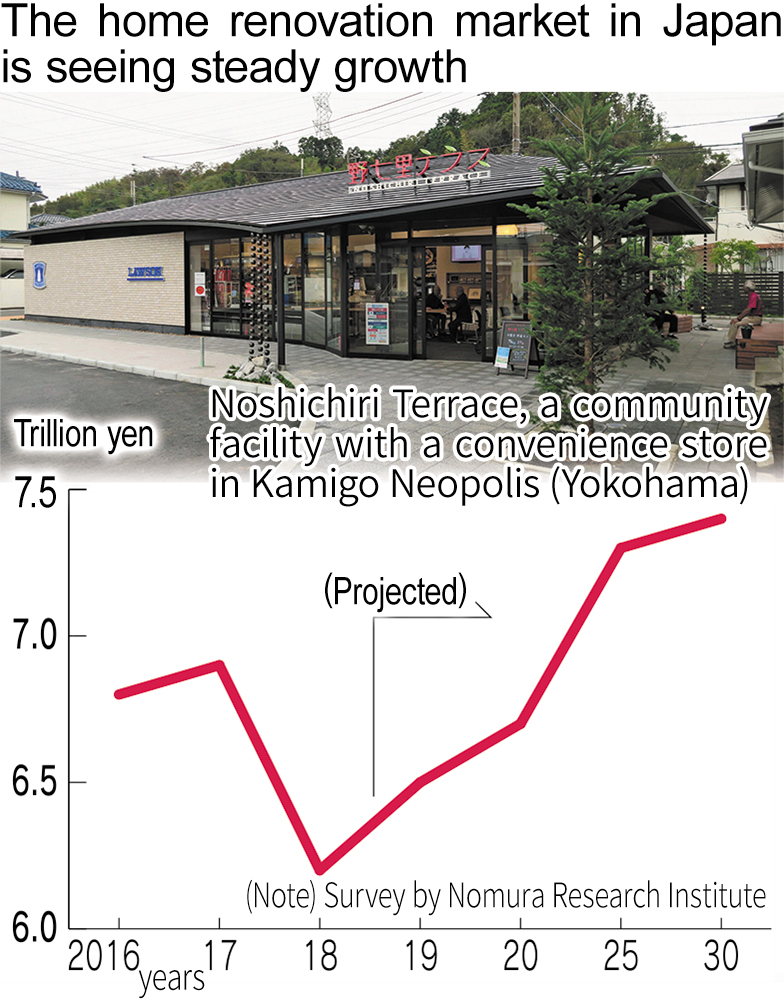
Daiwa House Industry has developed “Neopolis” residential areas in 61 locations across Japan since the 1960s. In more recent years, because Japan's population is aging, we have invited young people there and are rethinking our developments so that they facilitate communication and interaction with other generations.
Two years ago, Daiwa House Industry also launched our Livness business, which handles the brokerage, purchase, and renovation of existing homes. Just as every person has a story, we believe renovated buildings can also have a second chapter to their story. For that reason, it is also important to improve and make buildings better able to withstand natural disasters, including improved earthquake and water resistance.
Overseas, there are also container-type homes where residents can add or subtract rooms as the structure of their family changes. We at Daiwa House Industry want to provide our customers with homes in which they can live for a long time. But what do you, the reader, believe can be done to make such houses a reality in the future? I look forward to hearing your wisdom on the new forms houses should take.
【From the Editorial Committee】
In colloquial terms, when constructing or purchasing a house, we say “building a house” or “buying a house.” The word “house” has, in fact, three general meanings. The first is a literal building. The second is a home or household. And the third is family. In other words, a house is not just a place to live; it also carries the meaning of a family and lineage.
Just as President Yoshii said that homes can have their story, people want to go home because it is a place filled with family warmth, caring, and memories. The same is true for scratches on posts or pillars where the heights of family members have been measured. In an aging society, the demand for homes in which people can live for a long time is expected to continue to grow further.
Various changes and maintenance are required to make a home somewhere you want to live for the rest of your life. What can be done to let a home grow with its family? What kind of home do you want to live in for a long time? Please send us your thoughts and ideas.
(Waichi Sekiguchi, Nikkei staff writer)
“Vision of the Future” is a section that Nikkei Inc. creates through close consultations with our readers on various challenges. The latest issue focuses on ideas that can change the world. We invite everyone to offer suggestions.
Top executives of Japan's leading companies will select some of the most promising submissions.